





Elon Musk’s Original Dream: Controlling the Financial System
In 1999, when the internet was still experimental infrastructure rather than global necessity, Elon Musk launched a company called X.com. It was not meant to be just another fintech startup. It was conceived as a fully digital bank designed to challenge — and ultimately replace — traditional financial institutions.
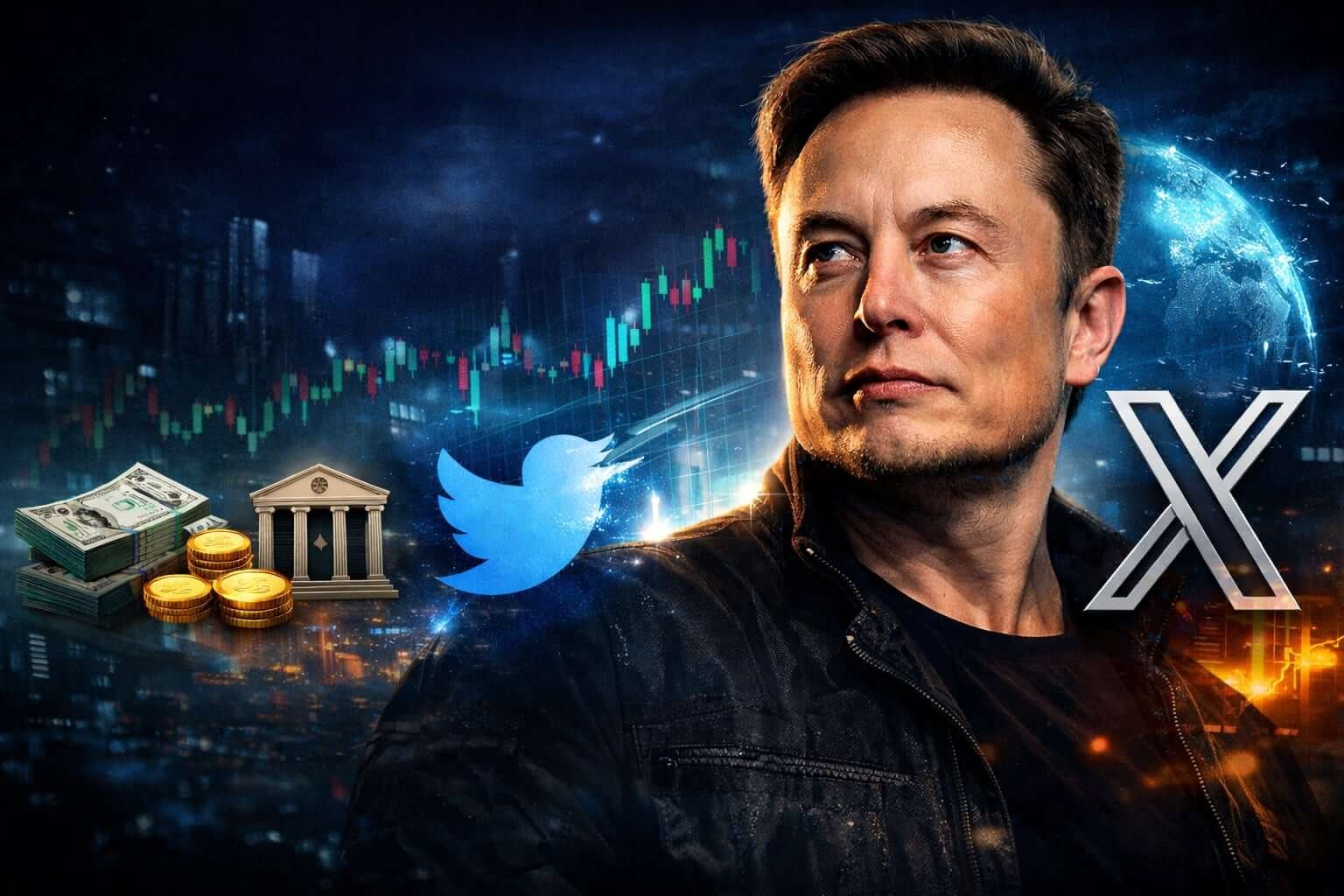
More than two decades later, that original ambition has resurfaced. The acquisition and rebranding of Twitter into X was not a cosmetic move. It was the revival of a long-standing vision: building an integrated financial and communication super-platform.
This is not simply a story about branding. It is about scale, power, and structural transformation.
The First Conflict: Branding vs. Ambition
When X.com merged into what would become PayPal, internal tensions quickly emerged.
“PayPal” was approachable. Trustworthy. It sounded like a friendly intermediary helping users send money. Focus groups favored it. The name communicated clarity and security.
“X.com,” on the other hand, felt abstract and ambiguous. Some early research suggested it even carried negative connotations.
But Musk was not building a niche payment processor. He was pursuing something far larger.
His logic was straightforward:
If the goal is to build a simple payment solution, PayPal works.
If the goal is to dominate the global financial system, X is the right name.
This was not merely a branding disagreement. It was a disagreement about the scale of ambition.
The Technical Dispute That Revealed a Deeper Divide
Even the debate over operating systems exposed this philosophical clash.
Musk favored Microsoft’s Windows NT. He admired Bill Gates and believed Microsoft would provide stability and corporate reliability.
His engineering team preferred Unix-based systems like Solaris or Linux, arguing they were more secure and better suited for internet infrastructure.
The now-legendary arm-wrestling episode between Musk and a co-founder may sound anecdotal, but it symbolized something deeper: Musk’s decisions are rarely about technical purity. They are about long-term control and scalability.
His obsession has never been about code alone. It has always been about architecture — not software architecture, but power architecture.
2022: The Return of the Original Vision
When Musk acquired Twitter in 2022 and rebranded it as X, he openly described the platform as the accelerator for the original X.com idea.
In his own framing, X is meant to become:
- A universal communication platform
- A financial infrastructure layer
- A payments system
- A digital wallet
- A potential identity hub
He stated that users would eventually manage “their entire financial world” within the application.
This is where the discussion shifts from innovation to systemic impact.
Innovation or Structural Concentration?
The financial sector represents the largest segment of the global economy. Information already equals influence. Financial control equals structural power.
If a single platform integrates:
- Social communication
- Personal data
- Financial transactions
- Credit systems
- Investment access
Then it ceases to be just a technology company. It becomes private infrastructure at civilizational scale.
In 1999, this ambition seemed futuristic.
In 2026, it is technically plausible.
The implications are profound.
The Real Disruption
Two statements stand out:
- “Dominate the global financial system.”
- “You will manage all your money through this application.”
Those are not incremental product updates. They describe systemic transformation.
The core question is not whether Musk can build a super-app. Technologically, it is feasible.
The real question is whether concentrating communication, capital flows, and digital identity within a single private ecosystem is desirable for society.
Throughout history, power has shifted to those who control infrastructure. In the digital age, infrastructure means platforms.
X is not simply a rebrand. It is a strategic attempt to become the interface between individuals and the global economic system.
Conclusion: A Dream That Never Disappeared
X.com was never a failed experiment. It was a postponed strategy.
The rebranding of Twitter was not symbolic nostalgia. It was a continuation of a 25-year vision.
Musk did not abandon X in 1999. He deferred it.
Now, with global reach, capital resources, and technological maturity, the project has re-emerged under conditions far more favorable to scale.
The outcome remains uncertain.
But one thing is clear:
X is not just a social platform. It is an attempt to redefine who controls financial infrastructure in the digital era.
And that changes the conversation entirely.