




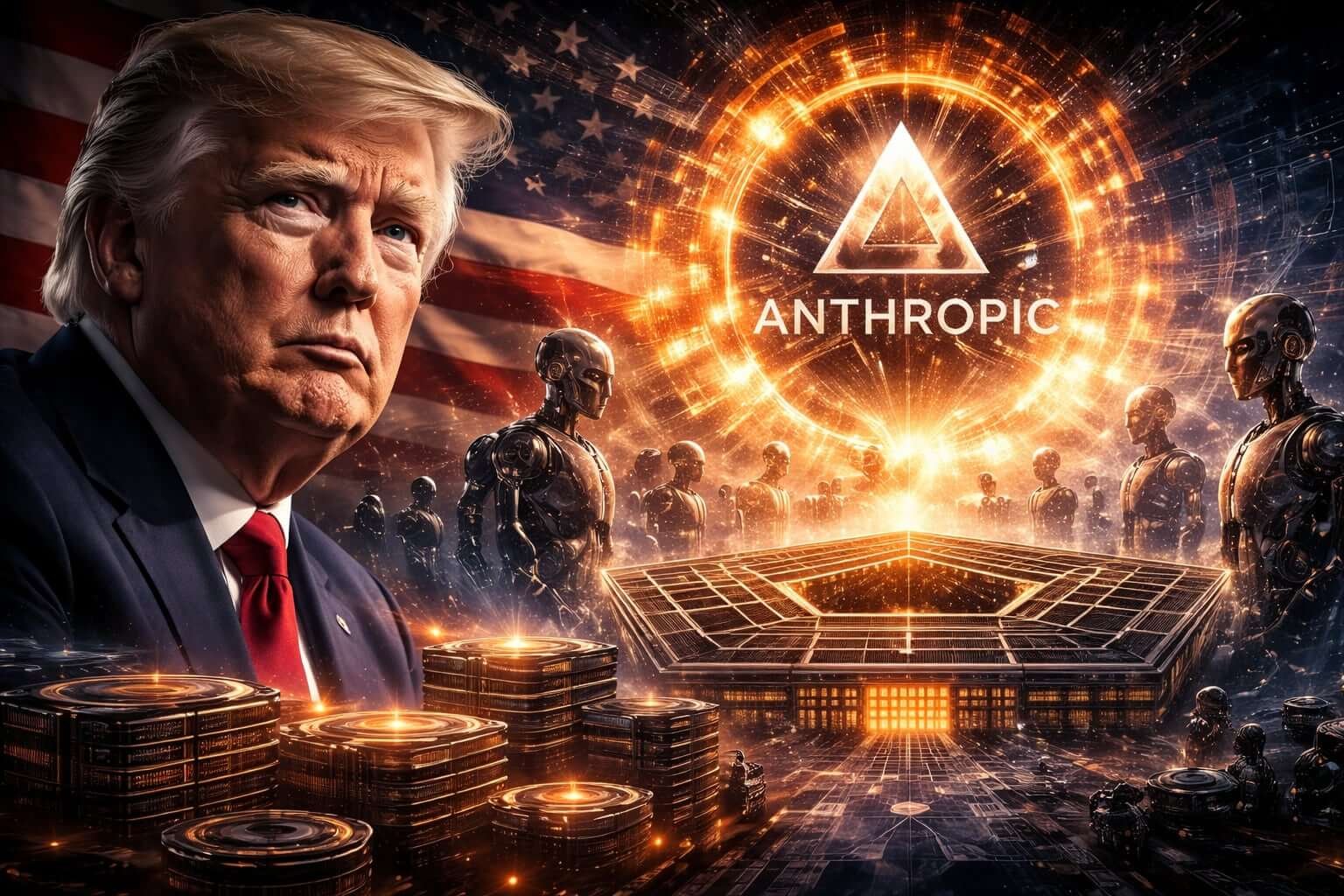

At first glance, this may look like a dispute over terms of service. It is not. What we are witnessing is a direct confrontation between sovereign political power and algorithmic corporate power. And, as is often the case with Trump, the negotiation begins at the extreme.
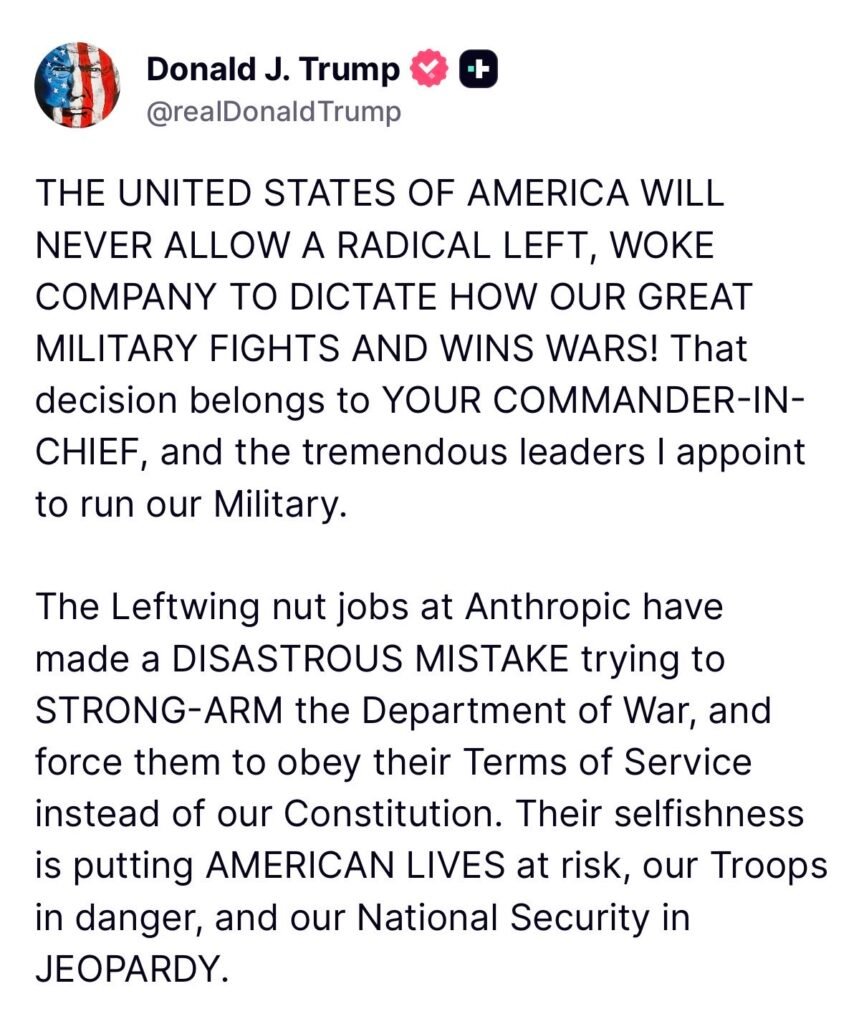
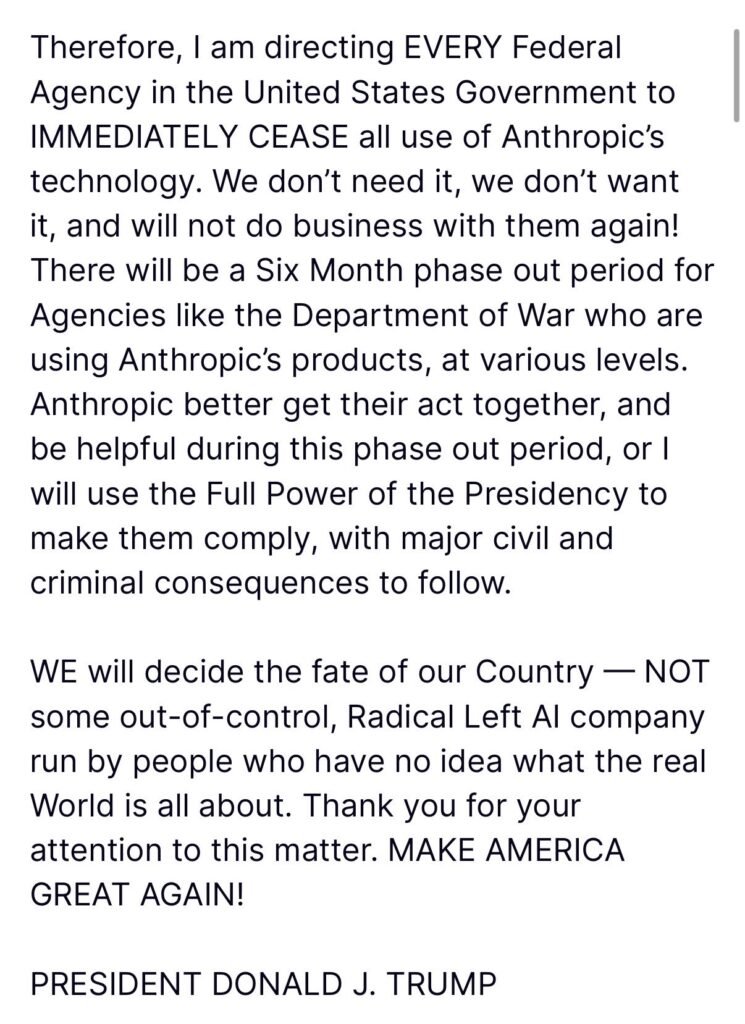
The statements attributed to President Donald J. Trump and Secretary of War Pete Hegseth demanding unrestricted access to Anthropic’s models – while threatening a full federal cease of its technology – are not impulsive rhetoric. They are leverage. Maximum-pressure leverage.
This is not simply about AI policy. It is about who controls the architecture of modern warfare.
The Core Dispute: Who Commands Military AI?
According to reporting from The Information, Axios, and Breaking Defense, the Pentagon sought broader operational access to Anthropic’s models for “lawful defense purposes.” Anthropic, however, maintained safeguards aligned with its internal policies designed to prevent harmful or escalatory use.
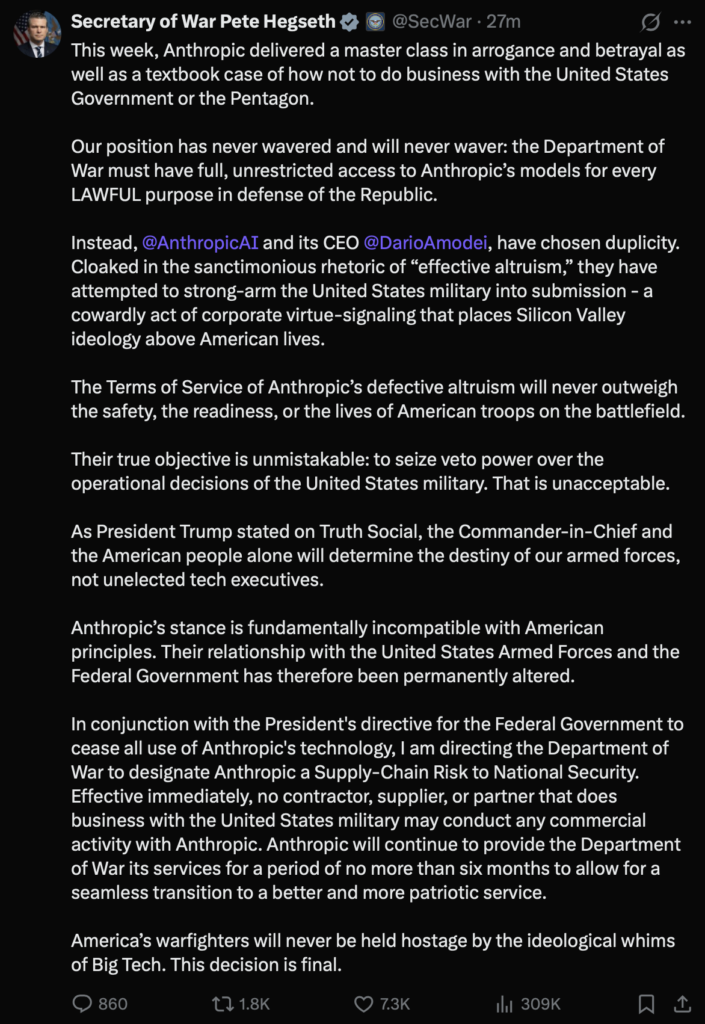
In its official statement, Anthropic clarified that:
- It does not seek to override constitutional authority.
- Its safeguards are designed to prevent large-scale harm.
- It remains open to cooperation within clearly defined safety boundaries.
(Anthropic, Statement on the Department of War, 2026).
The conflict is not technical. It is philosophical.
Can a private AI company impose limits on military usage when the government is the client?
The Trump Playbook: Raise the Stakes Publicly
Trump’s negotiation strategy has always followed a recognizable pattern:
- Escalate publicly.
- Frame the issue as national sovereignty.
- Force the counterpart into defensive positioning.
The language used — “CEASE all use,” “Full Power of the Presidency,” “National Security in JEOPARDY” — is not accidental. It transforms a contractual dispute into a sovereignty conflict.
But this time, the counterpart is not Beijing. It is Silicon Valley.
An Unusual Alignment: Rivals Close Ranks
Here is where the story becomes structurally important.
Despite being direct competitors, figures such as Sam Altman and Ilya Sutskever have consistently emphasized the importance of maintaining guardrails on advanced AI systems, particularly in high-risk domains. Reports suggest that leading voices in the ecosystem view unrestricted military access without safety frameworks as a precedent that could destabilize global norms.
This is not corporate solidarity.
It is ecosystem preservation.
When systemic AI risk is involved, competition temporarily gives way to alignment.
The Economic Dimension
This dispute unfolds against a massive economic backdrop:
- The U.S. Department of Defense budget exceeds $800 billion annually.
- Federal AI investment has accelerated sharply since 2021.
- Major AI firms already hold multi-billion-dollar federal contracts.
The Pentagon is not negotiating symbolic access.
It is negotiating strategic infrastructure.
If the government prevails fully, the state reasserts primacy over AI deployment.
If companies hold the line, corporate actors gain normative power over national defense policy.
This is not about one contract. It is about precedent.
Breakdown or Strategic Phase?
Despite incendiary rhetoric, there is no confirmed permanent rupture. Reports indicate transitional windows and ongoing discussions rather than immediate severance.
That suggests this is a pressure phase – not a finalized divorce.
Trump raises the cost.
Anthropic reinforces its principles.
Markets and allies observe.
Meanwhile, AI becomes explicitly central to national security doctrine.
My Reading
I do not see this as a simplistic clash between “Woke Silicon Valley” and “America First” nationalism. I see a structural shift: For decades, technology firms depended on governments. Now, governments increasingly depend on technology firms.
That inversion changes leverage.
The fundamental question is no longer who wins this specific standoff. The real question is: Who sets the operational rules of algorithmic power – elected officials or model architects?
We are entering a period where AI is no longer a tool of the state. It is a parallel power center. And when power centers collide, negotiation becomes confrontation.
Sources
U.S. Department of Defense Budget Overview (FY 2026).
Anthropic (2026). Statement on the Department of War.
The Information (Feb 2026). Anthropic’s Standoff With the Pentagon Over AI Safeguards.
Axios (Feb 2026). Hegseth gives Anthropic deadline over AI safeguards.
Breaking Defense (2026). Pentagon deadline over AI policy dispute.
