





A Mandate That Redefines Vehicular Privacy
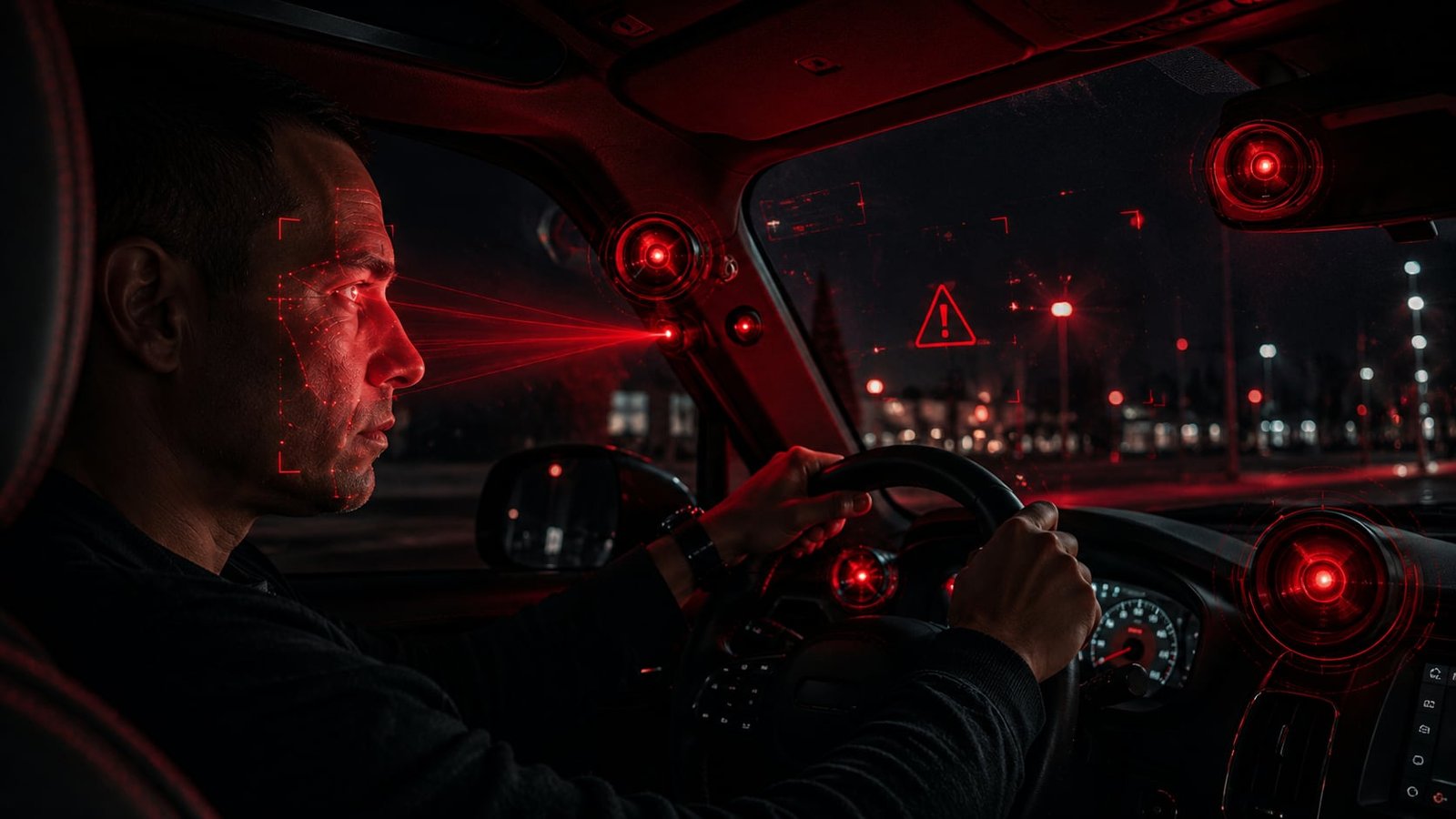
The federal law passed in 2021 is not just another technical safety detail. It is a turning point: it requires every new passenger vehicle to incorporate passive AI-powered monitoring technology capable of assessing the driver’s condition and, if deemed “inappropriate,” preventing or limiting vehicle operation. What is presented as an advance against drunk driving is, in reality, the institutionalization of constant surveillance inside the passenger compartment.
Every new car in the U.S. will be required by law to have tech that puts constant surveillance on the driver by 2027.
AI in your car will determine if you're sober and fit to drive, automatically turning off the vehicle if it determines you're a danger on the road. pic.twitter.com/7SDbAJ2GyC
— Pubity (@pubity) April 25, 2026
Safety as the Pretext for the Surveillance State
The provision, contained in Section 24220 of the Bipartisan Infrastructure Law (IIJA), directs the NHTSA to establish a federal standard for “advanced drunk and impaired driving prevention technology.” The system must passively monitor driver performance – eye movements, head position, fatigue, distraction, or alcohol levels – via infrared cameras and integrated sensors. If the AI detects risk, the car simply will not start or will severely limit its capability. The official argument is to reduce the approximately 10,000 annual deaths from drunk driving. Yet that noble end does not justify turning every vehicle into a mechanical judge that acts without due process or immediate appeal.
Technical Risks and Power Abuses That Are Not Being Discussed
NHTSA itself has acknowledged in reports to Congress that current technology does not yet achieve the required accuracy to reliably detect a blood alcohol concentration of 0.08% or higher through passive monitoring. An AI error – due to normal fatigue, stress, medication, or even an evasive maneuver in an emergency – could leave a driver stranded or, worse, in real danger. Who is accountable when the system fails? The manufacturer? The government? The answer, so far, is no one.
Moreover, the risk is not merely technical. This system generates real-time biometric data: gaze patterns, indirect heart rate, driving behavior. Once collected, that data can be stored, shared, or used beyond “road safety.” In a context of growing state surveillance, the possibility of selective activation based on unstated criteria (political, geographic, or “social risk”) is not science fiction; it is the natural logic of any mass-control tool once installed.
The Silent Erosion of Individual Freedom
The mandate does not only affect drunk drivers. It affects anyone purchasing a new car from 2027 onward. It represents the collective acceptance that the State has the right to place an electronic referee inside our private vehicle. It is the same reasoning that justified other mass intrusions: “it’s only for your safety.” History shows that control technologies rarely remain limited to their original purpose. Today it is sobriety; tomorrow it could be speed, fuel consumption, route, or the driver’s “risk profile.”
The Real Agenda Behind the “Kill Switch”
This is not about saving lives. It is about normalizing the idea that freedom of movement can be revoked by an algorithm. While the supposed technological progress is celebrated, the cost is ignored: the loss of autonomy, the creation of a dangerous precedent, and the transformation of the automobile – the historic symbol of independence in the United States – into a connected device controlled by default. If this is approved and implemented without real resistance, we will face one of the greatest individual sovereignty surrenders of the 21st century.
Sources
- Infrastructure Investment and Jobs Act (Public Law 117-58), 2021 Section 24220 – Advanced Impaired Driving Prevention Technology https://www.congress.gov/bill/117th-congress/house-bill/3684/text
- National Highway Traffic Safety Administration (NHTSA) Report to Congress: Advanced Impaired Driving Prevention Technology, March 2026 https://www.nhtsa.gov/sites/nhtsa.gov/files/2026-03/Report-to-Congress-Advanced-Impaired-Driving-Prevention-Technology.pdf
- The New York Post “Sinister in-car spy tech that can kill your engine will be mandatory next year under Biden policy”, April 30, 2026 https://nypost.com/2026/04/30/us-news/sinister-in-car-spy-tech-that-can-kill-your-engine-mandatory-next-year-under-biden-policy-sparking-major-privacy-fears/
- Congress.gov H.R.1137 – No Kill Switches in Cars Act (119th Congress) https://www.congress.gov/bill/119th-congress/house-bill/1137