





An Incident That Marks the Beginning of a Systemic Problem.
The Firm Advising OpenAI Falls Victim to Its Own Tool. Human Review Failures: Complacency at Two Thousand Dollars an Hour. Risks to the Integrity of the Judicial System. Non-Negotiable Lessons for Responsible AI Use in Critical Professions
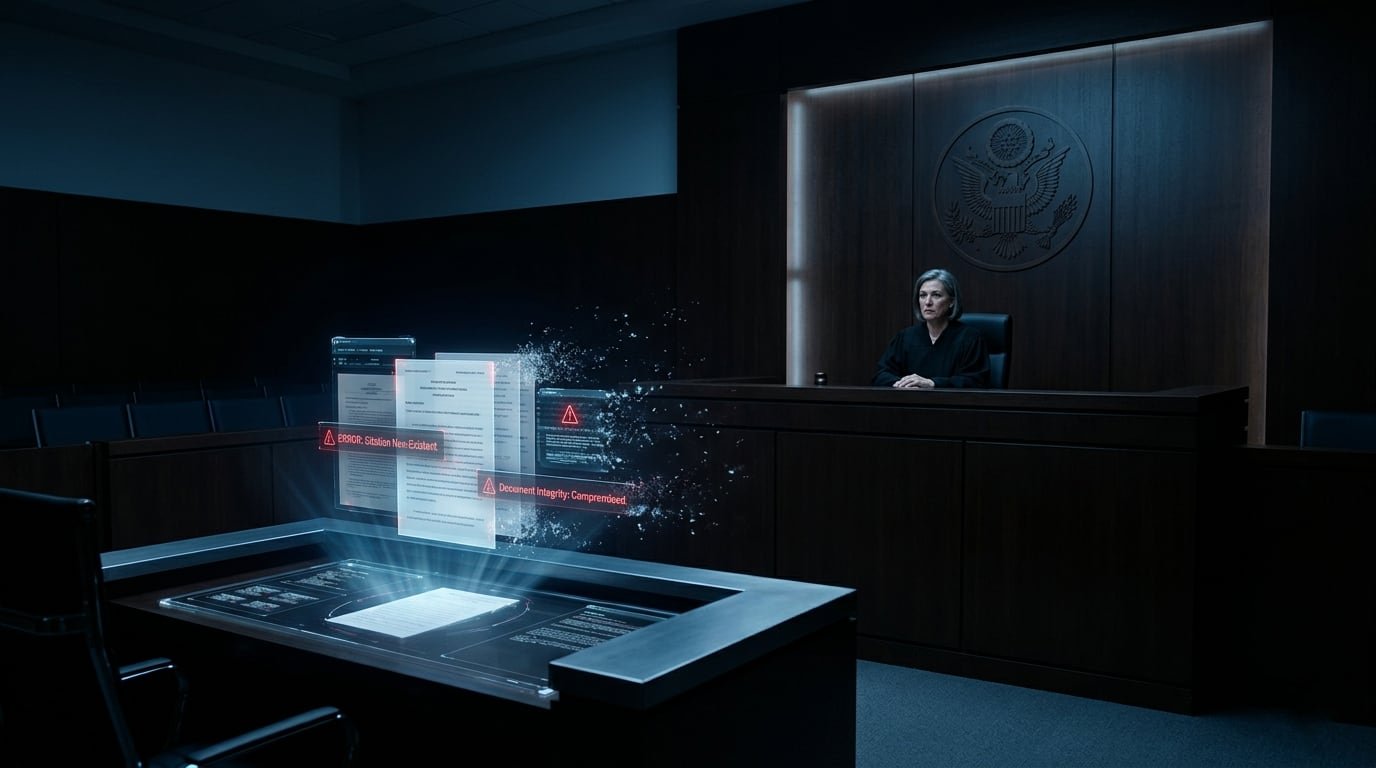
Sullivan & Cromwell, one of Wall Street’s most prestigious law firms and legal advisor to OpenAI on the ethical deployment of artificial intelligence, has been forced to apologize to federal Judge Martin Glenn of the U.S. Bankruptcy Court for the Southern District of New York. The reason: an emergency motion in the Chapter 15 bankruptcy case of Prince Global Holdings contained serious AI-generated errors, including citations to nonexistent cases, fabricated direct quotes, and entirely invented provisions of the U.S. Bankruptcy Code.
On April 18, 2026, partner Andrew Dietderich, co-head of the firm’s global restructuring group, sent a letter to Judge Glenn acknowledging the “AI hallucinations.” It was not a minor oversight. The firm had to file a three-page single-spaced correction listing more than forty inaccuracies. Most damning: both the primary team and secondary review – including senior partners – failed to catch any of it. The errors were exposed by opposing counsel from Boies Schiller Flexner.
This episode is not an isolated accident. It is confirmation that blind trust in AI tools without rigorous verification is infiltrating the highest levels of legal practice. Sullivan & Cromwell bills partners at over two thousand dollars per hour. Clients pay precisely for the absolute guarantee of accuracy in documents that can decide multibillion-dollar bankruptcies, global restructurings, or corporate fates. Yet the firm admitted that its own internal policy – “trust nothing and verify everything”- was violated. The AI generated the content; humans signed it.
The irony is devastating. The very firm advising OpenAI on the “safe and ethical” use of artificial intelligence has now proven in federal court that it cannot even manage the inherent limitations of the technology it promotes. Hallucinations are not anecdotal failures; they are structural. Current large language models fabricate citations, distort statutes, and invent precedents when exact matching data is unavailable. In law, where a single erroneous citation can invalidate an entire argument or expose the client to sanctions, this is unacceptable.
The Prince Global Holdings case —linked to a Cambodian conglomerate facing forced-labor allegations – was no trivial matter. An error in interpreting the Bankruptcy Code could have altered the course of an international restructuring. That the firm defending AI reliability in regulated environments has had to publicly humiliate itself before a federal judge should serve as the definitive wake-up call for the entire industry.
This is not about demonizing AI. It is about confronting reality: the tool is powerful for repetitive tasks and preliminary analysis, but it does not replace professional judgment or the ethical responsibility of the attorney who signs the document. Complacency – the belief that “the AI got it right” without verifying every citation – is the real enemy. And when that complacency occurs at a premium-billing firm, the reputational damage and loss of trust are proportional to the rates they charge.
Sources
- The New York Times (2026) A.I. ‘Hallucinations’ Created Errors in Court Filing, Top Law Firm Says https://www.nytimes.com/2026/04/21/nyregion/sullivan-cromwell-ai-hallucination.html
- Reuters (2026) Sullivan & Cromwell law firm apologizes for AI ‘hallucinations’ in court filing https://www.reuters.com/legal/litigation/sullivan-cromwell-law-firm-apologizes-ai-hallucinations-court-filing-2026-04-21/
- Above the Law (2026) Sullivan & Cromwell Files Emergency ‘Please Don’t Sanction Us For All These AI Hallucinations’ Letter https://abovethelaw.com/2026/04/sullivan-cromwell-files-emergency-please-dont-sanction-us-for-all-these-ai-hallucinations-letter/
- Sullivan & Cromwell (2026) Letter from Andrew Dietderich to Judge Martin Glenn (In re Prince Global Holdings) https://websitedc.s3.amazonaws.com/documents/In_re_Prince_USA_18_April_2026.pdf
- Bloomberg Law (2026) Sullivan & Cromwell Apologizes to Judge for AI Hallucinations https://news.bloomberglaw.com/business-and-practice/sullivan-cromwell-apologizes-to-judge-for-ai-hallucinations